
The Outer Worlds 2 – TSG Review
🎯 Verdict: Worth Waiting for a Sale
📅 Review Date: November 07, 2025 ⏱️ Playtime: 65 hours
🖥️ Platform: PC (Steam)
💰 Price: $69.99
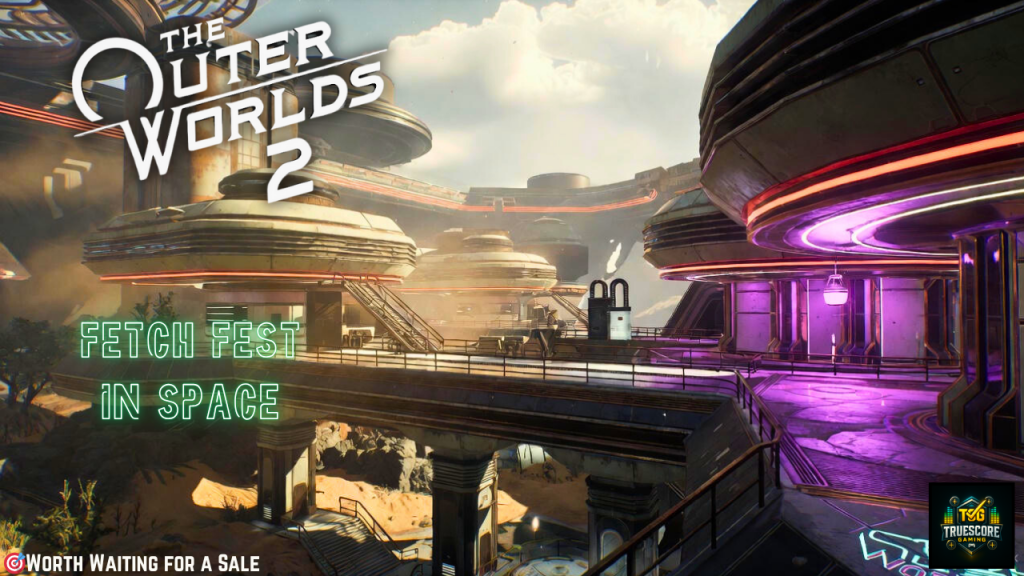
A middling sequel with strong aesthetics and tactical combat that coasts on the original’s goodwill. Obsidian delivers a retro-futurist colony with choice-driven factions, but predictable writing and fetch-heavy progression blunt the impact. It’s playable for sci-fi RPG fans, yet flaws like tedious loads and half-baked systems make it a discount pick at best.
I logged 65 hours on PC (Standard Edition via Steam), completing the main story, all side quests, companion arcs, and collectibles like ball cards and rifts. No early access or external influence shaped this take. Just my build-focused run through the conspiracy. Launch hit October 29, with no major patches by review time, leaving core gripes intact.
🎮 Gameplay Mechanics
The core loop blends tactical shooting and exploration in corporate outposts, with perk-gated utility like lockpicking for shortcuts and XP. Early clears reward curiosity through puzzles and lore scans, but late-game shifts to faction errands across planets, demanding repeated ship loads (dock to navigator to ramp exit, no mid-mission companion swaps). Controls respond well for combat swaps and gadget use, though stealth camo toggles feel binary and unfluid.
Standouts include healing/toxicity system that demand tactical use while in combat (full out-of-combat restores without penalty) and the evolving SMG from the ship, which buffs all weapons globally. Mods offer marginal tweaks and Perk trees and flaws encourage specialization (my lockpick and hack focus opened doors, though loot behind them rarely impressed). Difficulty stays fair on Normal, with higher modes ramping resource needs without frustration spikes.
Progression ties to skill dumps and faction rep for unlocks, but gear abundance outstrips usefulness (armor limited to chest and helmet slots). Gadgets like the N-Ray scanner aid hidden paths effectively, yet others (Time Dilation for one puzzle, thrusters as basic double-jump) fade post-tutorial. Rifts require backtracking for minor rewards, and pets end as static vendor-bought displays (only get to display one pet at a time on your ship). Replay comes from respecs and alliances, but linear skill trees and overall story and fetch repetition limit appeal. Fun erodes in chores like vague journal prompts forcing cleared-zone revisits.
📖 Story & Narrative Premise
A spacer pursues a long-lost traitor amid rift-torn colonies and warring factions, forging alliances in a corporate dystopia where decisions shape uneasy outcomes. The setup engages initially with branching paths, but predictability sets in quickly, from telegraphed twists to anticlimactic confrontations like the peace talks standoff. Pacing imbalances hit mid-game, slowing into errand slogs before a rushed finale.
Characters lean flat and archetype-driven, with a noticeable female skew among mains (over 70 percent) that feels unearned. Tristan stands out as the lone developed companion, his conviction adding wry satire to banter. Choices matter for rep and endings (my Order-Auntie’s hybrid amplified regrets), yet reactivity stays surface-level. Side quests tie in decently, but emotional urgency lacks throughout, turning potential satire into mundane filler.
🎨 Graphics & Art Style
Visuals deliver on retro-futurist grit: Dusty Monarch outposts and neon Cloister labs pop with ray-traced rifts and detailed environments. Textures and lighting hold at 1440p, with fluid combat animations. UI stays clean for journal and maps, though perk screens clutter slightly. No major bugs like clipping disrupt immersion, but backtracks highlight reused assets in cleared areas.
🎵 Sound & Music
Sound design bolsters tension: Charged weapon bursts and rift hums cue tactics effectively, with ambient footsteps enhancing exploration. Soundtrack provides a fitting corporate synth hum, immersive without distraction. No standout tracks emerge, but effects like toxicity ticks feel purposeful. Voice acting delivers competently, though mains like the traitor lack menace in delivery.
⚙️ Technical Performance
Performance runs smooth on mid-range rigs: Steady 60fps at 1440p with DLSS, no crashes or glitches over 65 hours. Loads prove excessive in fetch loops (10-15 seconds per ship ritual), unoptimized for repetition. UI intuitiveness shines in hotkeys, but journal vagueness frustrates navigation. Accessibility includes remaps and color modes, though font scaling lags. Overall polish feels solid technically, with narrative shortcuts as the real rush.
🔄 Replayability & Content
Content packs enough for a solid 65-hour grind—I cleared the main arc, sides, companions, and rifts without filler fatigue, but replay’s a non-starter. Faction splits tempt a replay and respec, but no procedural spice or deep reactivity keeps the playthrough linear. Skill trees sprawl wide, wasting half my perks on dead ends, while collectibles like cards and rifts drag out hours for scraps. Post-credits? None at all—just a choice-driven epilogue summary of your colony’s fate, then credits roll. Reload drops you right before the end of the game; no NG+ or lasting changes. Companion arcs tie off without forks. One playthrough is meaty; multiple feel like echoes in an empty hull.
💰 Value for Money
At $69.99, it overreaches for the filler: Complete base game without microtransactions or grind walls, but fetch padding and poor fast travel system inflates hours unnecessarily. Premium Edition hints to 2 potential story expansions (DLS), no cash grabs evident. Obsidian maintains consumer respect through stable launches, though scope creep hints at expansion reliance. Ammo and scrap “scarcity” fits survival, but underwhelming loot diminishes returns.
🎉 Fun Factor
Yes, with caveats. Combat got better towards the second half of the game and world exploration hooked me for bursts, and 65 hours passed without total burnout. Yet fetch tedium and predictability turned segments into chores, making it completion-driven over pure joy. I’d revisit mechanics like perks, not the narrative.
✅ Pro/Con Summary
Pros:
- Responsive combat and toxicity/heals for tactical depth.
- Aesthetically pleasing dystopian world with rewarding early exploration.
- Perk system and faction choices add some variety.
- Stable performance with no crashes or major bugs.
- Complete package without microtransactions.
Cons:
- Predictable story and flat characters lacking urgency.
- Late-game fetch loops with excessive loading rituals.
- Half-baked gadgets, pets, and rifts without follow-through.
- Underwhelming loot and gear progression.
- Vague journals and no mid-mission companion swaps.
📝 Raw Thoughts:
Obsidian builds cool worlds and mechanics, but apathetic writing caps a sequel’s potential into forgettable territory. Subtle gem: The female-heavy cast skew subtly undercuts the equal-opportunity satire without intent. Lived up to expectations? No. It echoed the original’s setup without the engaging conspiracy bite.
If corporate RPGs with choice hooks appeal to you, consider it on sale. Otherwise, stick to the first. What’s your take? Sequel fan or pass? Hit the comments.
📢 Share Your Thoughts! Did you play The Outer Worlds 2? Let me know your experience in the comments!
And join me on X for deeper discussions! Check out more reviews on my Game Reviews Page https://truescoregaming.com/reviews/
📲 Follow TrueScore Gaming for more reviews and discussions! 🔗 https://x.com/TrueScoreGaming | 🔗 https://www.youtube.com/@truescoregaming | 🔗 https://rumble.com/c/c-7593076